Common Number
Shillong Morning Teer Common Number: Complete Guide to Common Numbers, Previous Results, Charts and Patterns
Shillong Morning Teer Common Number is one of the most searched topics among people who follow Shillong Teer results, previous-result charts, house numbers, ending numbers and historical statistics. Every day, followers look at previous results to identify numbers or digits that have appeared repeatedly and are therefore described as “common numbers.”
A common number, however, should be understood as a historical pattern rather than a guaranteed prediction. Looking at previous results can help organize information and identify recurring digits, but it cannot establish what the next result will be.
Shillong Teer is connected to traditional archery in Meghalaya. Under Meghalaya's regulatory framework, arrow shooting and the sale of Teer tickets are subject to licensing and specified rules. The state's 2018 legislation defines arrow shooting as a game using traditional bows and arrows and establishes regulation of the game and Teer-ticket sales.
This guide explains what Shillong Morning Teer Common Number means, how people study previous results, what house and ending numbers are, how charts are prepared, and why historical frequency should not be confused with certainty.
What Is Shillong Morning Teer?
Shillong Teer is an archery-based number game associated with Meghalaya. The underlying result is connected to the number of arrows that successfully hit the target during an organized shooting session.
The final result is represented by a two-digit number. For example, if the relevant arrow count ends in 47, the displayed result can be 47. The same basic two-digit format is commonly used when discussing First Round and Second Round results.
Government rules for licensed arrow-shooting games specify requirements concerning the number of shooters, the number of arrows, the traditional target and shooting arrangements. The rules state that the total number of arrows used in each round should be between 700 and 2,000.
This physical archery component is important when understanding why the result is not simply a computer-generated sequence.
Why the result is shown as two digits
Suppose an official count ends with:
01 → result 01
17 → result 17
42 → result 42
68 → result 68
95 → result 95
00 → result 00
Therefore, a result chart can contain any two-digit combination from 00 through 99.
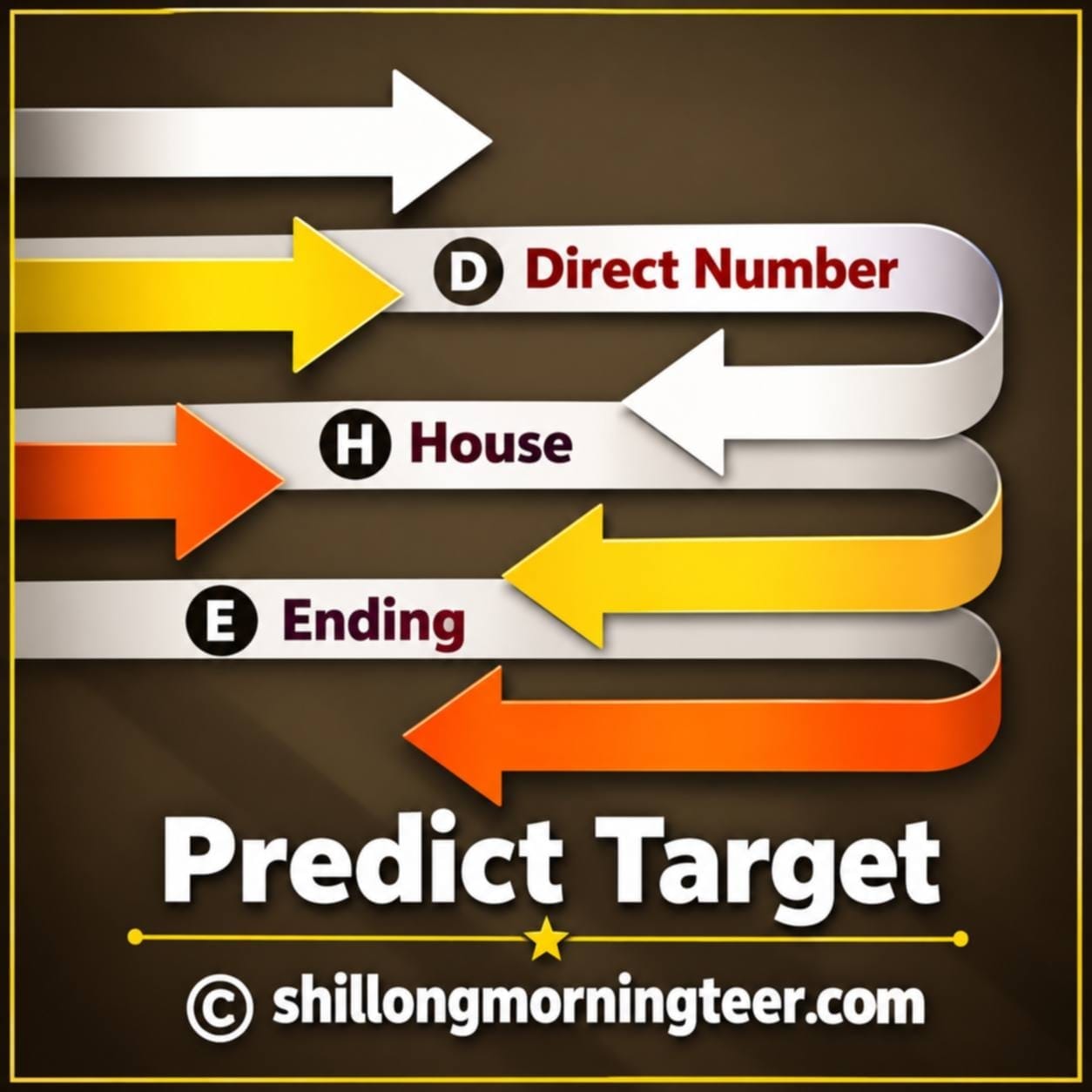
People studying previous results often break these two digits into separate components. This produces the terms house number and ending number.
What Is Shillong Morning Teer Common Number?
The phrase Shillong Morning Teer Common Number generally refers to a number or digit that has appeared relatively frequently in a selected group of previous results.
For example, imagine that a simplified historical chart contains:
Date Result
Monday 42
Tuesday 57
Wednesday 42
Thursday 18
Friday 42
In this small example, 42 appears three times, while the other numbers appear once.
Someone analyzing this short chart could describe 42 as a “common number” within that particular sample.
The important point is that the word common describes what happened in the selected historical data. It does not mean that the number is certain to appear again.
A larger chart may produce a different result. A number that looks common over seven days may not be common over thirty or ninety days.
That is why anyone reading a common-number chart should first ask:
What dates were included?
Was the chart based on FR, SR or both?
Was the analysis based on full numbers or individual digits?
How many previous results were examined?
How frequently did the number actually appear?
Is the information historical or being presented as a prediction?
These questions make a common-number chart much easier to understand.
Shillong Morning Teer Common Number Today
Searches for Shillong Morning Teer Common Number Today usually come from people who want a short list of numbers based on recent results.
Many online Teer-result pages publish common-number or target-number sections alongside previous results. However, the methods used by different websites can vary considerably. Some simply count repeated numbers, while others separate house and ending digits or use their own formulas.
For that reason, a “common number” should not automatically be interpreted as an official result.
There is an important difference:
Official result:
The result announced after the relevant archery round.
Previous result:
A historical result from an earlier date.
Common number:
A number or digit identified from historical frequency or a particular analytical method.
Target/prediction:
A number selected by a person or website as a possible future result.
These are four different things.
Keeping them separate prevents confusion when reading Shillong Morning Teer charts.
What Are House Number and Ending Number?
One of the most common terms in Shillong Teer discussions is house number.
Take the result:
47
The first digit is:
4
The second digit is:
7
In common Teer terminology:
4 = House number
7 = Ending number
47 = Full/direct number
Similarly:
Result House Ending
12
28
35
47
63
79
84
90
This breakdown is useful when creating a historical chart.
For example, suppose the previous results are:
>24, 41, 56, 44, 19
The house digits are:
2, 4, 5, 4, 1
The ending digits are:
4, 1, 6, 4, 9
Here, the digit 4 appears more than once in both groups, although that does not make it a future result.
Why Do People Study Common Numbers?
Historical charts can be useful for several reasons.
1. To understand previous results
A result archive makes it easier to see what happened over time instead of looking at isolated numbers.
2. To identify repeated digits
A person may notice that a particular house digit or ending digit has occurred several times.
3. To compare different periods
A seven-day chart can be compared with a thirty-day chart.
4. To organize information
Instead of simply reading dozens of two-digit numbers, a frequency table can show which numbers occurred most often.
5. To study historical patterns
Some followers enjoy statistical analysis and use previous results as a dataset.
None of these uses means that historical frequency can determine the next result.
How to Make a Shillong Morning Teer Common Number Chart
A simple common-number chart can be created using previous results.
Suppose the historical results are:
12, 25, 37, 25, 48, 62, 37, 71, 25, 84
Count each complete two-digit number.
Number Occurrences
25 3
37 2
12 1
48 1
62 1
71 1
84 1
In this sample, 25 is the most frequently occurring complete number.
That does not mean 25 is “due” to appear again. It simply appeared three times in the selected dataset.
A proper article or result page should make this distinction clear.
House-Digit Analysis
Instead of counting complete numbers, you can count the first digit.
Using the same sample:
12
25
37
25
48
62
37
71
25
84
The house digits are:
1, 2, 3, 2, 4, 6, 3, 7, 2, 8.
The frequency becomes:
House Digit Frequency
2 3
3 2
1 1
4 1
6 1
7 1
8 1
The number 2 is the most frequent house digit in this particular example.
Again, this describes the historical sample only.
Ending-Digit Analysis
The same process can be applied to the second digit.
Using:
12
25
37
25
48
62
37
71
25
84
The ending digits are:
2, 5, 7, 5, 8, 2, 7, 1, 5, 4.
Frequency:
Ending Digit Frequency
5 3
2 2
7 2
1 1
4 1
8 1
In this example, 5 is the most frequent ending digit.
This is the basic idea behind many discussions about “common ending numbers.”
Common Number vs Common Digit
These terms are sometimes mixed together, but they are different.
Common number
A complete two-digit result that appears repeatedly.
Example:
25
Common house digit
The first digit appearing frequently.
Example:
2
Common ending digit
The final digit appearing frequently.
Example:
5
Therefore, if a chart says:
House: 2
Ending: 5
it may produce the direct combination:
25
But that does not establish that 25 will be the next result.
Shillong Morning Teer Previous Result Chart
The previous-result chart is one of the most useful tools for historical analysis.
A simple chart might look like this:
Date FR SR
Day 1 24 61
Day 2 48 35
Day 3 72 14
Day 4 24 83
Day 5 56 35
Day 6 19 42
Day 7 67 24
From this chart, a reader can examine:
repeated FR numbers
repeated SR numbers
common house digits
common ending digits
numbers that have not appeared recently
frequency over different time periods
However, the chart itself remains historical information.
It does not turn past results into a reliable forecasting system.
FR and SR in Shillong Morning Teer
Teer result pages commonly use the abbreviations FR and SR.
They generally mean:
FR = First Round
SR = Second Round
The two rounds have separate results. A historical chart should therefore identify the round rather than mixing all numbers together without explanation.
This matters because a number appearing repeatedly in FR is not automatically the same statistical pattern as the same number appearing repeatedly in SR.
For example:
Date FR SR
Monday 25 64
Tuesday 37 25
Wednesday 25 81
Here, 25 appeared twice in FR and once in SR.
If you combine the columns, you get three appearances.
If you analyze FR separately, you get two.
Those are different calculations.
Should FR and SR Be Analyzed Separately?
For a clean historical analysis, it is generally better to keep them separate.
A chart can have three sections:
FR analysis
Look at previous First Round results.
SR analysis
Look at previous Second Round results.
Combined analysis
Study both rounds together, but clearly label that the dataset combines them.
This approach prevents a common-number article from creating confusion.
Seven-Day Common Number Analysis
A seven-day chart is useful for seeing very recent history.
For example:
Day Result
1 28
2 41
3 28
4 63
5 75
6 41
7 28
Frequency:
28 → 3
41 → 2
63 → 1
75 → 1
The most frequently occurring number in this sample is 28.
But the sample is very small.
A single additional result can significantly change the ranking.
For example, if the next result is 63, the frequency becomes:
28 → 3
41 → 2
63 → 2
75 → 1
This shows why short-term frequency can change quickly.
Thirty-Day Common Number Analysis
A thirty-day chart gives a larger sample.
It can be organized into:
full-number frequency
house-digit frequency
ending-digit frequency
FR frequency
SR frequency
A simple table could look like:
Number 30-Day Frequency
14 4
25 4
37 3
42 3
58 3
63 2
The numbers at the top appeared more frequently in this hypothetical dataset.
But frequency still does not establish future probability unless the underlying process and statistical assumptions support such an inference.
Why a Common Number Is Not a Guaranteed Number
This is one of the most important points for anyone searching for Shillong Morning Teer common numbers.
Suppose a number appears five times in a historical dataset.
It does not mean:
“It must appear again.”
Likewise, if a number has not appeared for twenty rounds, it does not necessarily mean:
“It is due.”
This is an example of the gambler's fallacy: assuming that a previous sequence creates an obligation for a future outcome.
Historical results can describe what has happened.
They cannot, by themselves, guarantee what happens next.
The Difference Between Frequency and Prediction
Frequency answers:
“Which numbers appeared more often in my selected historical dataset?”
Prediction attempts to answer:
“Which number will appear next?”
These are not the same question.
A frequency chart can be accurate even when the future prediction is wrong.
For example:
42 appeared 8 times during a selected period.
17 appeared 2 times.
65 appeared 5 times.
Those statements can be verified from the historical dataset.
But saying:
“42 will be the next result”
is a separate claim that cannot be established simply from those frequencies.
This distinction should always be maintained in a responsible Shillong Morning Teer article.
How to Read a Common Number Chart Correctly
When you find a Shillong Morning Teer common-number chart online, check the following.
Check 1: Date range
Is it based on:
5 days?
7 days?
15 days?
30 days?
90 days?
A different period can produce a different result.
Check 2: FR or SR
Does the chart analyze First Round, Second Round or both?
Check 3: Full number or digit
Is “common” referring to:
a complete two-digit number?
house digit?
ending digit?
Check 4: Frequency
How many times did the number actually appear?
Check 5: Source
Where did the historical results come from?
Check 6: Method
Does the page explain how its common number was calculated?
These checks help distinguish a useful historical chart from a vague prediction claim.
Shillong Morning Teer Common Number and Previous Results
Previous results are the foundation of most common-number discussions.
A reader might collect the last several results and create a table like:
Date FR SR
1 32 75
2 46 21
3 32 84
4 57 46
5 63 32
6 18 75
7 46 29
The repeated complete numbers include:
32
46
75
The house digits can then be analyzed separately.
This two-step approach is more transparent than simply publishing a list called “common numbers” without explaining where it came from.
What Does “Hot Number” Mean?
Another phrase frequently used on Teer-related websites is hot number.
Usually, it refers informally to a number that has appeared several times during a selected recent period.
For example:
If 27 appears four times during a 20-result sample, someone may call it a hot number.
The term is descriptive rather than official.
There is no requirement that a number called “hot” must appear again.
Similarly, a number that has not appeared recently may be described as a “cold number,” but being absent from recent results does not create a mathematical guarantee that it will appear next.
What Is a Cold Number?
A cold number generally means a number that has appeared infrequently or has not appeared during a selected period.
Suppose a 30-day chart contains many results but no 83.
Someone might call 83 a cold number.
However, absence from previous results does not establish that 83 is more likely to appear next.
A chart can show:
No appearance in 30 rounds
without proving:
Guaranteed appearance in the next round.
This distinction is particularly important when reading prediction-oriented content.
Common Number and Missing Number
Another common method is to look at numbers that have not appeared recently.
For example:
If a selected chart contains:
12, 15, 23, 34, 45, 56, 67, 78, 89
then many other numbers are absent.
But “absent” simply means they were not recorded in that particular sample.
A missing number is not automatically a target.
Historical absence and future likelihood are separate concepts.
Why Different Websites Publish Different Common Numbers
You may notice that two Shillong Morning Teer websites sometimes publish different common numbers.
This can happen because they use different:
date ranges
result sources
formulas
weighting systems
FR/SR combinations
house-digit calculations
ending-digit calculations
For example, Website A may examine the last seven results, while Website B may examine the last thirty results.
Both can produce different lists while using the same historical results.
This is why readers should look at the method instead of assuming that every “common number” label represents an official figure.
How to Build Your Own Common Number Table
A simple manual process is enough.
Step 1: Collect previous results
Record the date, FR and SR.
Step 2: Decide the analysis period
For example:
7 days
15 days
30 days
Step 3: Count complete numbers
Record how many times each two-digit number appears.
Step 4: Separate house digits
Count the first digit of each result.
Step 5: Separate ending digits
Count the second digit.
Step 6: Compare periods
You can compare recent frequency with longer-term frequency.
Step 7: Label the result correctly
Call it a:
historical frequency
rather than presenting it as a guaranteed forecast.
Example of a Complete Common Number Analysis
Consider this fictional dataset:
Day FR SR
1 24 67
2 42 15
3 24 83
4 71 42
5 58 24
6 42 39
7 16 67
FR frequency
24 → 2
42 → 2
71 → 1
58 → 1
16 → 1
SR frequency
67 → 2
15 → 1
83 → 1
42 → 1
24 → 1
39 → 1
Combined frequency
24 → 3
42 → 3
67 → 2
15 → 1
83 → 1
71 → 1
58 → 1
16 → 1
39 → 1
In this fictional example, 24 and 42 are the most frequently appearing complete numbers in the combined dataset.
That is a valid historical observation.
It is not evidence that either number must be the next result.
Understanding the Role of Statistics
Statistics can make a previous-result chart easier to understand.
Useful measurements include:
Frequency
How many times did a number appear?
Percentage
What percentage of recorded results contained a particular digit?
Recency
When did the number last appear?
Range
How many days or rounds were examined?
Distribution
How were results distributed across the digits 0–9?
These measurements describe the dataset.
They should not automatically be presented as a predictive formula.
Why Previous Results Can Look Like Patterns
Humans naturally look for patterns.
Suppose a chart shows:
23
48
23
71
23
It is easy to notice that 23 appears three times.
But another sequence could look completely different:
14
62
38
91
47
Both are possible historical sequences.
A short dataset can contain clusters, repetitions and gaps simply because repeated values can naturally occur.
Therefore, pattern recognition should be supported by a clearly defined method.
Does a Repeated Number Become More Likely?
Not necessarily.
If a number appears several times in previous results, its historical frequency has increased.
But that does not automatically mean the next result is more likely to repeat it.
Likewise, a number that has not appeared for several rounds does not automatically become more likely.
This is why the phrase “common number” is safer and more accurate when used to describe historical frequency rather than certainty.
Shillong Morning Teer Result vs Common Number
These terms should never be confused.
Result
The officially announced number for a completed round.
Previous Result
A result from an earlier date.
Common Number
A number identified as frequently occurring in a selected historical dataset.
Target Number
A number selected by a particular prediction method or website.
Dream Number
A traditional or personal number association that some followers use.
The result is the actual outcome.
The others are methods of organizing, interpreting or discussing numbers.
Why the Official Result Matters Most
Once an official round has been completed and the result has been declared, that result becomes the reference point for the historical chart.
A common-number page cannot replace the actual result.
For example:
Common number: 42
does not mean:
Official result: 42
unless the officially announced result is actually 42.
This distinction should be maintained on every result page.
Meghalaya's Regulatory Framework
Shillong Teer is not simply an informal number sequence. Meghalaya has a specific legal framework governing arrow shooting and Teer-ticket sales.
The Meghalaya Regulation of the Game of Arrow Shooting and the Sale of Teer Tickets Act, 2018 regulates the activity throughout Meghalaya. The Act defines arrow shooting as a game using traditional bows and arrows and establishes rules concerning the game and Teer tickets.
The associated rules include requirements for licensed operators, shooters, arrows and targets. For example, the rules specify that the number of shooters should be between 30 and 50 and that each round should use between 700 and 2,000 arrows.
These regulations help explain why Teer results are connected to an organized archery process rather than being simply generated by a website.
How the Arrow Count Becomes a Two-Digit Result
The basic concept is straightforward.
Imagine that officials count:
1,247 arrows
The final two digits are:
47
So the displayed result is:
47
Another example:
1,385 → 85
Another:
1,102 → 02
This is why results are generally represented as two digits.
The exact operational details of a particular Morning Teer session should be checked against the current licensed organizer and official information rather than assumed from third-party websites.
Why Weather and Archery Conditions Are Relevant
Because the underlying event involves physical archery, real-world conditions can vary.
Factors affecting an archery session can include:
archer performance
shooting conditions
target conditions
number of participating shooters
arrow placement
organization of the round
However, observing that such factors exist does not provide a reliable formula for predicting a specific two-digit result.
This is another reason why previous-result charts should be treated as historical records.
Common Number: Short-Term vs Long-Term
A useful way to analyze historical information is to compare two periods.
Short-term
Last 7 or 10 results.
Medium-term
Last 30 results.
Long-term
A much larger historical archive.
A number may be common in one period but ordinary in another.
For example:
Number 7-Day Frequency 30-Day Frequency
24 3 5
42 1 6
67 2 4
Here, 24 is more prominent in the short period, while 42 has a higher longer-term count.
This demonstrates why the analysis period should always be shown.
How to Create an SEO-Friendly Shillong Morning Teer Result Page
If you operate a website publishing Morning Teer information, a useful page can include:
Today's result
First Round result
Second Round result
Previous result chart
Seven-day chart
Thirty-day chart
Common number explanation
House-number statistics
Ending-number statistics
Historical archive
FAQ section
The page should clearly distinguish official results from analysis.
This makes the content more useful to readers searching for Shillong Morning Teer result, Shillong Morning Teer common number, Morning Teer previous result, Shillong Teer chart, and related terms.
Important Search Terms Related to Shillong Morning Teer Common Number
People searching for this topic may use several variations, including:
Shillong Morning Teer Common Number
Shillong Morning Teer common number today
Morning Teer common number
Shillong Teer common number
Morning Teer common number today
Shillong Morning Teer number
Shillong Morning Teer result
Shillong Morning Teer previous result
Shillong Morning Teer chart
Morning Teer previous result
Morning Teer result today
Shillong Teer previous result
Shillong Teer number
Shillong Teer house number
Shillong Teer ending number
Morning Teer house number
Morning Teer ending number
Shillong Morning Teer statistics
Shillong Morning Teer old chart
Shillong Morning Teer result chart
These keywords describe different search intents and should not all be forced into a single paragraph.
Common Number FAQ
What is Shillong Morning Teer Common Number?
It generally refers to a number or digit that has appeared frequently in a selected set of previous Shillong Morning Teer results.
Is a common number an official result?
No. A common number is an analytical or informational label. The official result is the number announced after the relevant round.
What is a house number?
The house number is generally the first digit of a two-digit result.
For example, in 47, the house digit is 4.
What is an ending number?
The ending number is generally the second digit.
For 47, the ending digit is 7.
What does FR mean?
FR generally means First Round.
What does SR mean?
SR generally means Second Round.
Can previous results predict the next result?
Previous results can be analyzed for historical patterns, but they do not guarantee a future result.
Why do different websites show different common numbers?
They may use different historical periods, datasets or calculation methods.
Is a common number the same as a result?
No. A common number is an analysis of previous data, while a result is the officially announced outcome.
What is a hot number?
It is an informal term for a number that has appeared frequently in a selected recent dataset.
What is a cold number?
It usually describes a number that has appeared infrequently or not recently in a selected dataset.
Tips for Reading Shillong Morning Teer Charts
A few simple habits can make result charts easier to understand.
Always check the date
Do not assume that an old chart represents today's information.
Check the round
Make sure you know whether a number belongs to FR or SR.
Check the source
Use a reliable result source and compare information when necessary.
Look at the time period
A seven-day common number and a thirty-day common number can be different.
Separate numbers from digits
A full number such as 47 is different from house digit 4 and ending digit 7.
Do not confuse frequency with certainty
Repeated historical appearance does not establish the next result.
A Simple Common Number Template
For readers who want to organize their own historical chart, the following format is useful:
Category Information
Analysis period Last 7/15/30 results
FR results Historical FR list
SR results Historical SR list
Common direct numbers Most frequent complete results
Common house digits Most frequent first digits
Common ending digits Most frequent second digits
Last appearance Date a number last occurred
Frequency Number of appearances
Source Result archive/source
This format makes the analysis transparent.
Why Transparency Matters
A good Shillong Morning Teer article should explain how its numbers were selected.
Instead of writing:
“Today's sure common number is 42.”
a more transparent description would be:
“In the selected historical dataset, 42 appeared three times and was therefore among the more frequently occurring numbers.”
The second statement can be checked against the data.
The first statement presents certainty that historical data cannot establish.
Clear language is especially important for pages that receive large numbers of searches for daily results and common numbers.
Historical Analysis Is Not the Same as a Guarantee
This principle applies throughout the subject.
A chart can tell you:
what happened yesterday
what happened last week
how often a number appeared
which digits occurred frequently
how often a number appeared in FR
how often a number appeared in SR
But a chart cannot guarantee tomorrow's number.
That is why a common-number article should focus on data, definitions and historical records rather than presenting a particular number as certain.
Shillong Morning Teer Common Number: Final Overview
Shillong Morning Teer Common Number is essentially a way of discussing numbers or digits that occur repeatedly in previous Morning Teer results.
The subject becomes much easier to understand when the main terms are separated:
Shillong Morning Teer refers to the morning archery-based session.
FR refers to the First Round.
SR refers to the Second Round.
House number refers to the first digit of a two-digit result.
Ending number refers to the second digit.
Common number refers to a number or digit that appears frequently in a selected historical dataset.
Previous result refers to an already completed result.
Chart refers to an organized record of historical results.
The official regulatory framework in Meghalaya provides rules for licensed arrow shooting and Teer-ticket activity, including requirements concerning shooters, arrows and traditional targets.
For anyone researching Shillong Morning Teer, historical charts can be a useful way to organize information. The most meaningful approach is to state the date range, separate FR and SR where appropriate, show the actual frequency and explain whether the analysis concerns complete numbers or individual digits.
Most importantly, a common number is a description of historical data, not a guarantee of a future result.
A well-maintained previous-result chart therefore remains the best starting point for understanding how numbers have appeared over time, while the official announced result remains the definitive record for each completed round.